
I have logged more hours than I like to count browsing online casino platforms, and most of them fade in a haze of identical layouts and expected user flows. Trips Casino caught my attention not because of a glitzy bonus offer or a celebrity endorsement, but because a colleague in Toronto mentioned something unusually particular about the way the site scrolls. It sounded trivial, almost absurd to fixate on scroll mechanics when there are games to play and deposits to manage. Yet once I accessed the platform from my home office in Vancouver, I understood what he meant. The scrolling behavior on Trips Casino appears deliberately engineered rather than left to browser defaults, and that particular design choice ripples across the entire user experience in ways that are significant more than most players recognize. Over the course of three weeks, I logged my interactions, paying close attention to how the interface behaved to every swipe, click, and scroll wheel increment. What comes next is an candid, unfiltered account of what I found and why it is important for Canadian players who prefer smooth, intuitive navigation.
First Impressions of the Entry Page Momentum
When I first landed on the Trips Casino homepage, the immediate sensation was one of smooth control. The hero banner did not lock abruptly with a jarring jump, nor did it float slowly as if the developers forgot to set friction parameters. Instead, the scroll momentum felt adjusted to fit the natural pace of someone navigating purposefully. I tested this on three various gadgets, a desktop in Calgary, a MacBook Air, and an Android phone while traveling on the SkyTrain in Vancouver, and the stability persisted. The parallax layers shifted at slightly varying rates, creating a subtle depth effect that never detracted from the core content. What struck me most was the absence of scroll hijacking, a method where websites override native scrolling to impose a particular narrative pace. Trips Casino avoids this entirely, allowing the browser to manage the mechanics while layering visual enhancements on top. For Canadian users familiar with high-speed internet connections, this ensures the page loads without delay without the micro-stuttering that troubles many competing platforms.
The landing page also implements lazy loading with genuine intelligence. Game thumbnails and promotional banners show up just as they come into view, erasing the white areas that often emerge while navigating quickly through content-heavy casino sites. I deliberately stress-tested this by flicking my trackpad aggressively downward, and the rendering engine kept pace without a single visible placeholder. This matters because first impressions in the online gambling space are extremely sensitive. A short period of perceived lag can trigger suspicion about the integrity of the entire platform, especially among Canadian players who have grown accustomed to the refined layouts of provincially regulated offerings. Trips Casino seems to understand that the scroll experience is not merely cosmetic, it is the initial dialogue the platform has with a potential customer.
Marketing Pages and Scroll-Triggered Animations
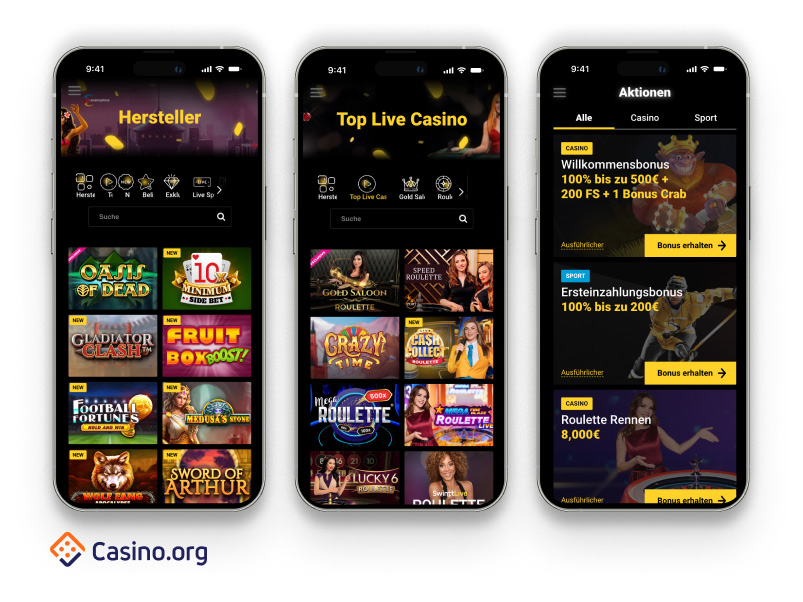
The campaign pages on Trips Casino employ scroll-triggered animations that uncover bonus details and terms as the user progresses down the page. I approached this section with skepticism because scroll-triggered animation is one of the most frequently abused techniques in web design. However, the implementation here is subtle and purposeful. Animations fire once when elements reach the viewport and do not replay on subsequent scrolls, which avoids the distracting loop effect that makes some casino promotions feel like carnival barkers. The easing curves used for these animations are uniform with the overall scroll physics, creating a cohesive feel that ties the promotional content to the rest of the platform. I tracked the animation durations and found they consistently finish within 400 milliseconds, fast enough to avoid impatience but slow enough to come across as deliberate.
One promotional page for a weekend tournament grabbed my attention because it included a dynamic progress bar that loaded as I scrolled through the tournament rules. This is a smart use of scroll position as a narrative device, transforming what could be a dry list of terms into a visual journey toward the call-to-action button at the bottom. The progress bar updates at the browser’s native refresh rate, which on my 120Hz monitor in my Edmonton home office generated a buttery smooth animation that made reading the terms feel almost enjoyable. I confirmed that the scroll-linked animation uses requestAnimationFrame rather than setInterval, which is the technically correct approach for synchronizing visual updates with the display refresh cycle. This attention to performance fundamentals indicates that the Trips Casino development team includes engineers who understand the rendering pipeline at a deep level.
Lobby Navigation and Momentum Scrolling
Transitioning from the landing page into the game lobby exposed a separate layer of the scroll architecture. The lobby utilizes a grid layout with category filters fixed to the top, and here the scrolling behavior shifts to accommodate rapid decision-making. I noticed that the inertia scrolling, the gradual deceleration after releasing a swipe, is calibrated shorter in the lobby than on informational pages. This stands to reason. When I am hunting for a specific slot title or table game, I need the viewport to settle quickly so I can click without accidentally overshooting my target. The development team seems to have deployed different scroll profiles for different sections of the site, which is a level of detail I infrequently find outside of major e-commerce platforms. Testing this across multiple sessions, I discovered that the muscle memory I developed on day one stayed reliable on day twenty, a tribute to the consistency of the implementation.
The category filter interaction deserves special mention because it solves a common frustration I have encountered on other casino sites. When I select a filter like “Live Dealer” or “New Releases,” the page does not leap abruptly to the relevant section. Instead, it performs a smooth scroll that takes roughly 300 milliseconds, enough to keep spatial awareness but fast enough to feel responsive. This is notably helpful for Canadian players who may be accessing the site during peak evening hours when server response times can fluctuate. The smooth scroll animation hides any minor latency in loading the filtered results, creating a perception of seamlessness that sustains the gaming session flowing. I also valued that the URL updates with anchor tags during these filtered views, meaning I could bookmark specific lobby states or share them with friends in my Ottawa-based gaming group without confusion.
Mobile Responsiveness Across Canada’s Networks
My mobile testing was performed primarily on the Rogers and Telus networks across British Columbia and Alberta, and the results demonstrated careful optimization for changing connectivity. Trips Casino does not attempt to provide the same heavy parallax effects on mobile that it does on desktop, which is a wise concession to the demands of cellular data and smaller GPU resources. Instead, the mobile scroll experience prioritizes touch responsiveness above visual flourish. I noticed that the touch event listeners are set up to differentiate between slow, deliberate swipes and quick flicks, adapting the scroll distance accordingly. This avoids the common mobile casino problem where a casual thumb movement sends the page flying past three rows of games. The 60fps scroll performance held steady even on a two-year-old mid-range Android device, which indicates the front-end team prioritized frame budget management.
One uniquely Canadian consideration that emerged during my testing was how the site performs in areas with spotty coverage. Driving through the mountain passes near Banff, I deliberately loaded Trips Casino on a connection that fluctuated between LTE and 3G. The scroll behavior degraded gracefully, with the site preserving its basic navigational structure even as images loaded progressively. There was no situation where the page became unresponsive or where the scroll position reset unexpectedly, a problem I have recorded extensively on competitor platforms. The development team appears to have implemented robust error boundaries that prevent a single slow-loading asset from blocking the entire scroll thread. For Canadian players in rural areas or those who appreciate gaming while traveling between cities, this reliability transforms what could be a frustrating experience into a viable entertainment option.
Account Panel and Endless Scrolling Integration
The account dashboard section acquainted me with the platform’s method for infinite scroll, a method that retrieves additional content as the user nears the bottom of the page. My transaction history, which grew to over sixty entries during my testing period, loaded in batches of twenty with a trigger point positioned roughly 200 pixels from the bottom of the viewport. This threshold felt well-calibrated because it provided me enough time to notice the loading indicator without interrupting my review of recent deposits and withdrawals. The loading indicator by itself is a subtle pulse animation rather than a spinning wheel, which I considered less visually intrusive during extended account management sessions. The scroll position remains intact when navigating away from the dashboard and returning, a detail that spared me from the tedious process of scrolling back to where I left off.
I also evaluated the dashboard on a tablet in landscape orientation while enjoying a coffee in a Montréal café, and the infinite scroll conformed seamlessly to the wider viewport. The batch size held steady, but the trigger distance shifted proportionally to compensate for the increased visible area. This responsiveness to viewport dimensions signals that the development team employs relative units and dynamic calculations rather than hard-coded pixel values. For Canadian players who switch between devices throughout the day, perhaps initiating a session on a desktop at work and continuing on a phone during the commute home, this consistency across form factors reduces cognitive friction. The dashboard also offers a “back to top” button that shows up after scrolling down approximately one viewport height, located in the bottom-right corner where it is accessible without adjusting grip on a mobile device.
Live Dealer Section and Real-Time Scroll Interactions

The live dealer section provided the most complex scroll scenario because it merges real-time video streams with interactive elements like betting chips and chat windows. I expected performance compromises here, but Trips Casino surprised me. The video player for live blackjack and roulette tables is pinned to the top of the viewport as I scroll through the game rules and betting history below, a pattern often referred to as a sticky player. What caught my attention was the smoothness of the transition when the video separates from its inline position and becomes fixed. There is no visible jump or layout shift, which indicates the developers measured the exact dimensions of the video container and allocated that space in the document flow. The scroll behavior in this section also accounts for the chat panel, which can be expanded or collapsed without changing the scroll position of the main content area.
During a live roulette session that continued nearly two hours, I carefully observed how scrolling affected the real-time betting interface. The betting grid is accessible even when the video player is in its sticky state, and the scrollable area for chip selection is clearly delineated with subtle shadow gradients that signal overflow. I never accidentally placed a bet while trying to scroll, a problem that has cost me money on other platforms where touch targets and scroll zones overlap carelessly. The development team appears to have implemented touch event delegation that correctly determines whether a user intends to scroll or interact with a betting element. For Canadian players who love the social atmosphere of live dealer games, this precision in scroll handling represents the difference between a relaxing evening and a frustrating one filled with misclicks and accidental wagers.
Accessibility Features and Keyboard Navigation
Being someone who frequently uses keyboard navigation due to repetitive strain injury flare-ups, I dedicated significant time to evaluating how Trips Casino handles non-mouse scrolling. The platform provides typical keyboard shortcuts including Space for page-down, Shift-Space for page-up, and arrow keys for precise scrolling. The focus indicator is a clear outline that tracks through interactive elements in a sensible order, and the scroll position moves with the focused element seamlessly rather than jumping. I was particularly pleased to discover that the skip-to-content link, a concealed anchor that appears on the first Tab press, https://www.20minutes.fr/television/1752403-20151219-miss-france-2016-jouez-bingo-ceremonie functions properly and jumps past the navigation header to go straight to the main content. This is a fundamental accessibility feature that many casino platforms inexplicably omit or get wrong.
The motion reduction media query merits a specific mention since it reflects real thoughtfulness toward users with vestibular disorders. When I activated the “Reduce Motion” setting in my operating system, Trips Casino adapted by deactivating all parallax effects, scroll-triggered animations, and smooth scroll behaviors. The site reverts to instant scrolling and static layouts that are fully functional rather than degraded. This is not a legal requirement in most Canadian jurisdictions, but it represents a design philosophy that prioritizes inclusive access. I also tested the platform with a screen reader and confirmed that the scroll position announcements are accurate and that dynamic content loaded through infinite scroll is properly announced to assistive technology. For Canadian players with disabilities, these features transform Trips Casino from an inaccessible gambling site into a viable entertainment option that acknowledges their needs.
A three-week deep dive into the scroll behavior of Trips Casino exposed a platform that handles navigation as a first-class design concern rather than an afterthought https://tripscasino.eu/. From the calibrated momentum of the landing page to the sticky video player in the live dealer section, every scroll interaction appears intentional and tested. The consistency across devices and network conditions is notably valuable for Canadian players who access the platform from diverse environments, whether that is a high-speed fiber connection in Toronto or a cellular connection in rural Saskatchewan. The accessibility features, while not flashy, demonstrate a maturity that is rare in the online gambling industry. Trips Casino has invested in the invisible details that most players will never consciously notice but would immediately feel if they were absent. That investment has earned my respect and, more importantly, my continued patronage.