
Walking into the online corridors of Spinfest Casino, players often are drawn to the bright lights of slots, yet the table games section offers a unique promise. These are the games where skill and decision-making truly shift the odds, turning a pastime into a journey of mastery. The best strategy for table games at Spinfest Casino is not a one secret trick but a multi-layered approach merging mathematical fundamentals, disciplined bankroll management, and a clear understanding of the exact rule variations on offer. From the multi-hand blackjack tables to the captivating roulette wheels and baccarat pits, every game delivers a special puzzle. This guide unpacks those puzzles step by step, delivering a practical roadmap for players who want to go past guesswork and tackle the platform’s classic card and wheel games with true confidence and a structured plan.
Understanding the House Edge and Rule Differences
Prior to placing a single chip, a strategic player must grasp the house edge, the mathematical advantage the casino possesses in any game. This percentage signifies the average gross profit the casino expects from every wager across the long run. At Spinfest Casino, certified random number generators guarantee theoretical return-to-player rates hold true over millions of hands. The critical insight lies in the fact that the house edge is not constant; it fluctuates significantly based on rule sets. A blackjack game paying 3:2 for a natural possesses a vastly lower edge than one paying 6:5, and a single-zero roulette wheel almost cuts in half the casino’s advantage relative to a double-zero variant. Table selection, therefore, turns into the first strategic act. A player who clicks the first available blackjack seat without checking rules forfeits a percentage of potential return ahead of the cards are distributed.
The practical application starts with actively hunting for the most favorable conditions in the Spinfest lobby. Prefer European Roulette instead of American Roulette whenever possible, as the single zero lowers the house edge from approximately 5.26% to 2.70%. In blackjack, rules such as the dealer staying on soft 17, the ability to double down after splitting, and late surrender all chip away at the advantage, pushing the game nearer to a near-even proposition when used alongside correct basic strategy. Understanding that the edge is a variable, not a constant, forms the groundwork for all other table game tactics are developed. Beyond headline rules, subtle variations in side bet offerings also influence the strategic landscape. Side bets such as Perfect Pairs or announced roulette wagers typically possess a house edge surpassing 10%, turning them into rare, small-stake entertainment instead of a core part of a mathematically sound plan.
Baccarat game and the Banker wager Approach
Baccarat provides a distinctive strategic arena because, unlike blackjack, the player takes no decisions about how the hand is handled after the wager is set. The game functions on fixed drawing rules, removing away the notion of control and laying the mathematical reality bare. The entire strategy at Spinfest Casino therefore narrows into a simple, powerful rule: the disciplined, unwavering devotion to the Banker bet. This is not myth; it is a cold mathematical reality. The Banker hand succeeds slightly more often than the Player hand due to drawing rules that benefit its position. After accounting for the standard 5% commission on winning Banker bets, the house edge rests at approximately 1.06%, making it one of the most beneficial wagers in the entire casino. The Player bet bears a house edge of around 1.24%, a small discrepancy that builds over hundreds of hands to steadily drain a bankroll faster.
The true strategic error in baccarat is the Tie bet, which entices players with its attractive 8:1 or 9:1 payout. The house edge on the Tie bet is devastating, frequently climbing above 14%. A strategic player treats the Tie bet as if it does not exist, resisting to be enticed by a large payout that masks an abysmal probability of winning. The entire framework is an practice in restraint: select the bet with the lowest house edge and reapply it mechanically, ignoring the human desire for variety. Scorecard tracking, where players diligently note outcomes, is a psychological comfort aid with no mathematical effect on future hands. Each hand is an independent incident, and patterns like the “Dragon Tail” are retrospective mirages. The strategic player may observe the scorecard for entertainment but will never alter their bet selection based on a perceived streak. The discipline is to lay the Banker bet, cover the commission, and redo, a monotony that is the cost of the lowest house edge.
Roulette Approaches Beyond the Martingale
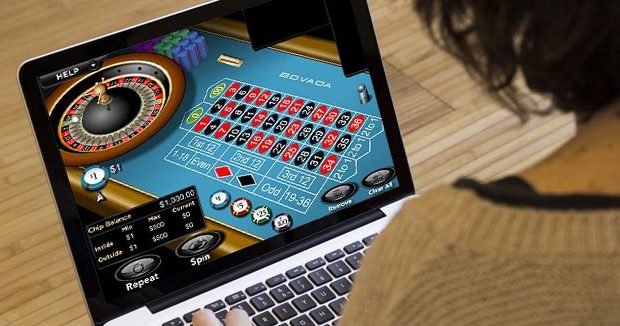
Roulette’s spinning wheel is often viewed as randomness, but a sophisticated betting strategy can still affect the risk and reward framework of a session at Spinfest Casino. The most famous, and riskiest, approach is the Martingale system, where a player multiplies by two their even-money bet after every loss. The tempting logic is that a win will eventually recover all previous losses and yield a small profit. The devastating flaw is the mix of table limits and finite bankrolls. A losing streak of just seven or eight spins propels the required stake into astronomically high territory, regularly striking the table’s maximum bet limit and eliminating the player’s funds before the recovery win can take place. The Martingale turns small, frequent wins into a strong likelihood of a ruinous, bankroll-ending loss, and no strategic player should rely on it.
A more enduring approach focuses on managing volatility rather than pursuing losses. The D’Alembert system, a negative progression with a considerably steadier curve, raises the even-money bet by one unit after a loss and lowers it by one unit after a win. It assumes wins and losses will roughly balance out and provides a structured, low-stress framework for a extended session without the violent swings of the Martingale. Another strategic consideration is bet composition. Making a combination of inside and outside bets can create broad wheel coverage while aiming at specific sectors for higher payouts, mixing the steady pace of column bets with the thrill of a straight-up number. The most crucial roulette tactic at Spinfest, however, continues to be the relentless pursuit of the single-zero European wheel. If French variants with “la partage” or “en prison” rules are available, the house edge on even-money bets falls to just 1.35%, making any double-zero American wheel a blatant contradiction of sound strategy.
Bankroll Handling as a Fundamental Strategic Pillar
No discussion of table game strategy is comprehensive without strict bankroll management, the practice that separates a sustainable hobby from a rapid path to depletion. Even a player executing perfect basic strategy in blackjack or steadfastly backing the Banker in baccarat will go broke if their stake sizing is careless. The core rule is to regard the gambling bankroll as a dedicated, finite entertainment fund, completely isolated from essential living expenses. At Spinfest Casino, a strategic player begins a session with a pre-set loss limit and a win goal, and they maintain the iron discipline to respect both. A standard and efficient approach is the session bankroll method, where a player designates only a small percentage, perhaps 5% to 10%, of their total bankroll to any single sitting, guaranteeing that a bad run of variance cannot wipe them out in one go.
The unit size is the basic building block. A unit should constitute a small fraction of the session bankroll, typically between 1% and 2%. For a session bankroll of £200, a conservative unit would be £2 to £4. This sizing allows the player to endure the inevitable negative swings embedded into the mathematics of every table game. In blackjack, the unit system also supports strategic doubling down and splitting, as the player will occasionally need to commit multiple units to a single high-advantage hand without the stake becoming excessively large. A common pitfall is the “scared money” phenomenon, where a player bets too large a percentage of their funds and becomes emotionally compromised, unable to make the correct strategic decision. Proper unit sizing keeps the mind clear and the strategy intact. Discipline around payment methods can strengthen these boundaries, perhaps by placing a specific amount onto an e-wallet for a week’s play and refusing impulsive deposits when that balance is gone.
Maximizing Platform Tools and Live Dealer Play

A complete table game strategy at Spinfest Casino goes beyond the felt and into the smart utilization of the platform’s own features. The welcome offer and ongoing promotions, while subject to terms, can provide additional funds that effectively lower personal financial exposure. A strategic player studies the terms meticulously, devoting close attention to wagering requirements, game contribution percentages, and time limits. Table games often account to a much lower percentage to wagering than slots, sometimes as little as 10% or even 0%, so comprehending this nuance prevents the frustration of finding a bonus cannot be unlocked through the preferred game. The strategy is to view a bonus not as free money, but as a conditional tool that can lengthen playtime if the terms match with the player’s habits. The technological infrastructure is another asset: a reliable, licensed platform guarantees fair, audited random number generators, the bedrock upon which all mathematical strategy is built.
Mobile compatibility is a pragmatic consideration. A player who has internalized a blackjack strategy chart needs the interface to be responsive and clear on a smartphone or tablet, allowing exact, error-free decisions without mis-taps. Testing the platform on a chosen device ensures the layout of bet buttons and card displays aids, rather than hinders, decision-making. The strategic player also uses account history and responsible gaming tools as a core part of their approach. Regularly reviewing transaction and game history provides an objective, data-driven look at actual performance, stripping away the emotional memory of a near miss. Deposit limits, session reminders, and time-out features streamline the discipline of bankroll management, removing the need for a moment of willpower in the heat of a losing streak.
When transitioning from digital RNG tables to the live dealer environment, the mathematical foundations remain the same, but the operational tempo and human elements introduce new variables. The most immediate change is the slower, natural pace of a live dealer game, which reduces the number of hands per hour and thus the theoretical loss over the same time period. A strategic player can use this extra time to reconfirm a blackjack decision or recalculate their bankroll position. The chat function and history boards present in live lobbies can create social pressure, but the strategic player remains immune, anchored to immutable math rather than the crowd’s mood. The presence of a real dealer and physical wheel can, however, provide psychological reassurance for those who find digital RNG opaque. A critical practical consideration is table limits, which are often higher in the live dealer lobby due to operational costs. A player with a modest bankroll must verify that the minimum bet aligns with their unit size, opting for the lowest viable live limit or sticking with digital tables until the bankroll comfortably supports the higher stakes.
Perfecting Core Blackjack Strategy
Blackjack remains distinct as the table game where player decisions most significantly impact the outcome, making it the ultimate proving ground for strategic play at Spinfest Casino. The cornerstone is the basic strategy chart, a mathematically derived set of rules determining the optimal play for every possible player hand against every dealer upcard. This is not a system of hunches; it is the result of billions of simulated hands, identifying the decision that minimizes losses or maximizes gains over time. The chart tells a player clearly when to hit, stand, double down, split pairs, or surrender, and deviating from it virtually always increases the house edge. Memorizing this chart is a non-negotiable first step for anyone who wants to sit at a blackjack table with serious intent. The logic is clear once broken down: always stand on a hard 17 or higher, always hit a hard 11 or lower, and exploit the dealer’s weak cards.
Against a dealer’s 4, 5, or 6, which are statistically likely to lead to a bust, the strategy often calls for standing on stiff hands like 12 through 16, pushing the dealer to take the risk. Doubling down on a 10 or 11 against those weak cards is another high-leverage move, exploiting on a strong position to get more money on the table when the odds are favourable. Soft hands, those containing an Ace valued as 11, add complexity. A soft 18 against a dealer’s 9, 10, or Ace is a classic example where the chart recommends hitting, a move that feels counterintuitive but is mathematically correct because standing makes the hand a long-term loser. Splitting pairs is equally rule-bound: always split Aces and Eights, never split Tens and Fives. Players at Spinfest can drill these decisions in free-play mode until they become automatic, erasing hesitation and emotional decision-making so each session becomes a disciplined execution of a proven framework.
FAQ
What exactly is the single most important rule to check at a blackjack table?
The payoff for a natural blackjack is the most critical rule. A table paying 3:2 for a blackjack has a significantly lower house edge than one paying 6:5. The 6:5 payout dramatically increases the casino’s advantage, making the game far less favourable for the player. A strategic player should always verify this rule in the game’s information section before sitting down and should actively avoid 6:5 tables whenever a 3:2 alternative is available in the lobby.
Why is the Tie bet considered a poor strategic choice in baccarat?
The Tie bet carries an exceptionally high house edge, often exceeding 14%, despite its attractive 8:1 or 9:1 payout. This means that for every £100 wagered on the Tie, the theoretical loss is over £14, compared to just over £1 on the Banker bet. The probability of a tie occurring is very low, and the payout does not adequately compensate for the risk. A disciplined strategy treats the Tie bet as a non-existent option.
Is a betting system like the Martingale overcome the house edge in roulette?
No wagering strategy can beat the inherent mathematical house edge in roulette. The Martingale system, which involves doubling bets after losses, does not change the probability of the next spin. Its fatal flaw is that a long losing streak will rapidly hit the table’s maximum bet limit or deplete the player’s bankroll, leading to a catastrophic loss that eliminates all previous small gains. The house edge remains fixed regardless of the bet size.
How does a player find the specific rules for a table game at Spinfest Casino?
The majority of digital and live dealer games at Spinfest Casino include an information or help icon, often displayed as an “i” or a question mark, found inside the game interface https://spinfestcasino.eu/. Tapping this will show a detailed screen outlining the specific paytable, rule variations, and payout odds for that particular table. Examining this information before playing is an important first step for any strategic player to ensure the rules correspond to their optimal play strategy.
What represents a sensible unit size for a bankroll management strategy?
A reasonable unit size for bankroll management usually spans 1% to 5% of the total bankroll. This strategy assists in reducing risk while allowing for longer playing sessions. Gamblers should choose a unit size that fits their comfort level and overall bankroll amount.
A prudent and sensible unit size is typically between 1% and 2% of a player’s total session bankroll. For a session budget of £200, this would mean betting units of £2 to £4 per hand or spin. This approach provides a sufficient buffer to absorb the natural negative variance of table games without risking a rapid depletion of funds. It also allows for strategic moves like doubling down in blackjack without the stake becoming uncomfortably large.
Do the strategies for digital RNG table games the same as for live dealer games?
The core mathematical strategies, such as basic strategy in blackjack or always betting on the Banker in baccarat, are the same for both digital RNG and live dealer versions. The primary differences are operational: live games run at a slower pace, which can be advantageous, and often have higher minimum table limits. The strategic player uses the same fundamental principles but adjusts their table selection to match their bankroll and preferred speed of play.
In what way do wagering requirements affect a table game bonus strategy?
Wagering requirements specify how many times a bonus amount must be wagered before winnings can be cashed out. Crucially, table games often contribute a much lower percentage to these requirements than slots, sometimes only 10% or even 0%. A strategic player must read the bonus terms to see the game weighting, as playing blackjack or roulette might make it practically impossible to fulfill the bonus within the time limit, leaving the offer unsuitable for a table game focus.